

Define the leadership the appointment requires
Executive search professionals and CHROs need a shared understanding of what the next leader must accomplish and which capabilities deserve emphasis․ Executive Selection Brief helps you develop those requirements and explain why they matter for this appointment․
The result is a clearer, better-reasoned search mandate that your team can examine and refine before comparing candidates․
Work through the mandate with an AI assistant
Start with your knowledge of the organization and the questions still open․ The AI assistant works through the business situation, the role’s objectives, decision authority and conditions for success․ It brings conflicting expectations, assumptions and unresolved decisions into the discussion․
Review the preliminary brief, examine the interpretations and proposed requirements, and correct or add information․ You and the search professional decide which proposals are useful and what needs further work․
Get a brief you can use with your selection team
The brief brings together the following․
- The organization, the role and its mandate, expected outcomes and the conditions that shape the leadership task․
- The most relevant leadership capabilities and the reasons for emphasizing each in this appointment․
- Suggested interview questions and guidance on what to examine in candidates’ answers․
- Other role requirements, the opportunity, working and appointment terms, search arrangements and open questions․
Use it as a shared basis for finding candidates, organizing their comparison and explaining the eventual selection decision․ The brief defines the requirements; individual candidate assessment remains a separate part of the process․
See the brief in practice
This example concerns a service director who will take over day-to-day operational coordination across two regions․ It shows how the mandate connects with leadership capabilities, interview questions and the evidence worth examining․
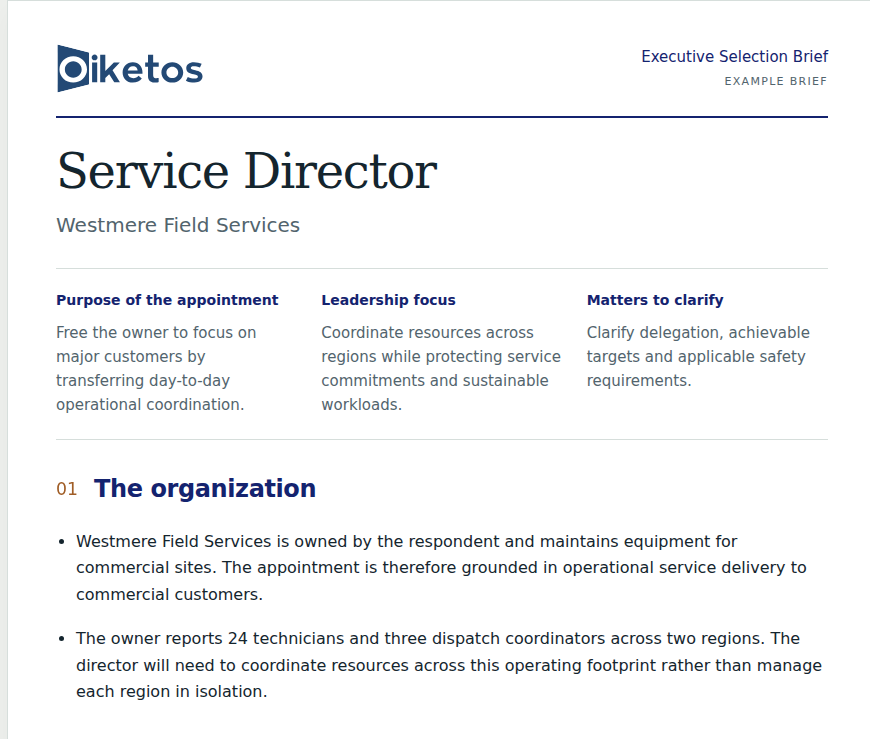
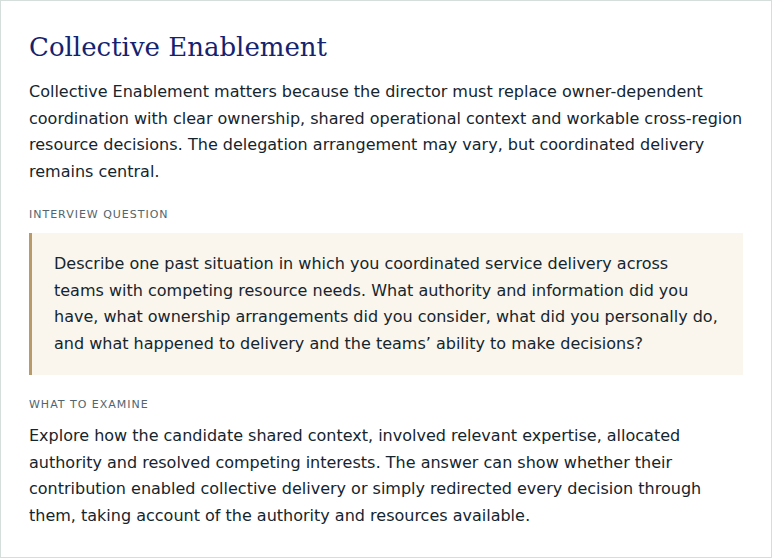
View example brief Download PDF
Keep the reasoning open to examination
The product supports confidence in the mandate through four practices․
- Each proposed leadership capability is connected to the role’s concrete objectives and operating context․
- Information supplied by the client, plans and open matters remain distinguishable․ An unresolved decision remains open․
- Separate content checks examine contradictions, unsupported requirements and potential bias․
- The client and search professional can challenge the reasoning, correct the starting information and judge whether the proposals are useful․
This gives the team a more transparent basis for discussing expectations and agreeing on the search․ Candidate selection and appointment decisions remain with the responsible people․
Research expertise behind the brief
The method draws on leadership and selection research, including Dr․ Hannu Sehm’s doctoral research and his peer-reviewed perspective article on executive selection criteria․
Explore our approach and its research basis for the reasoning behind the method․